

CSPA Program, Moonrise Hotel, St. Louis, September 15–17
Plenary Sessions
September 15
5:00 Keynote Address: John Doris, Washington University
Chair: Berit Brogaard, UMSL
September 16
4:00 Business Meeting and Presidential Address: Berit Brogaard,
“Intellectual Flourishing as the Fundamental Epistemic Norm”
Chair: Paul Weirich, University of Missouri
5:00-7:00 Reception, Moonrise Rooftop
September 17
5:00 Keynote Address: John Hawthorne, University of Oxford
Chair: Berit Brogaard, UMSL
Concurrent Sessions, Room 1, September 15
9:00 An Impasse over Epistemic Value - A Critique of Linda Zagzebski's Arguments Against Pure Reliabilism and Proper Functionalism
Speaker: Devon Bryson, University of Tennessee, Knoxville
Chair: John Greco, St. Louis University
Commentator: Andrew Spear, Grand Valley State University
10:00 The Value of Knowledge: A Primary Good
Speaker: Daniel Pilchman, University of California, Irvine
Chair: Heather Werner, UMSL
Commentator: Kristian Marlow, UMSL
11:00 Knowing Versus Knowledge - The Two Questions within the Secondary Value Problem
Speaker: Zack Robinson, UMSL
Chair: Brendan Murday, Ithaca College
Commentator: Trent Dougherty, Baylor University
12:00 Lunch
1:00 Neo-Aristotelian Plenitude
Speaker: Ross Inman, Trinity College, Dublin
Chair: John Heil, Washington University
Commentator: Irem Kurtsal Steen, UMSL
2:00 Functions Must be Performed at Appropriate Rates in Appropriate Situations
Speaker: Gualtiero Piccinini, UMSL, and Justin Garson, Hunter College/City University of New York
Chair: Lynn Chien-Hui Chiu, University of Missouri
Commentator: Eric Kraemer, University of Wisconsin-La Crosse
3:00 Special Science Kinds - Property Clusters without Homeostasis
Speaker: Bernhard Nickel, Harvard University
Chair: Sarah Robins, Washington University
Commentator: Christopher Pearson, Southern Illinois University Edwardsville
4:00 Panel: Natural Kinds
Speakers: Daniel A. Weiskopf, The Human Stain - Concepts, Anthropic Kinds, and Realism, Georgia State University
Andrew McFarland, How are Kinds Individuated?, University of Kansas
Alexander Bird, The Ontology of Natural Kinds, University of Bristol
John Camacho, Natural Kinds and Scientific Practices, UMSL
Chair: Kent Staley, St. Louis University
Concurrent Sessions, Room 2, September 15
9:00 Frankfurt Cases, Gettier, and the Principle of Alternative Possibilities
Speaker: Adam R. Thompson, University of Nebraska – Lincoln
Chair: Krista Hyde, UMSL
Commentator: Michael Neal, UMSL
10:00 Against Counterfactuals of Libertarian Freedom - There is Nothing I Would have Done if I Could Have Done Otherwise
Speaker: Paul C. Anders, Mount Marty College, and Joshua Thurow, College of Southern Nevada
Chair: Seth Kurtenbach, University of Missouri
Commentator: Grant Sterling, Eastern Illinois University
11:00 Are There True Libertarian Action Counterfactuals?
Speaker: Daniel Rubio, Western Michigan University
Chair: Krista Wiley, UMSL
Commentator: David Killoren, University of Wisconsin – Madison
12:00 Lunch
1:00 Compositional Nihilism and the Puzzles of Coincidence: A Response to McGrath
Speaker: Holly Kantin, University of Wisconsin – Madison
Chair: Leigh C. Vicens, University of Wisconsin – Madison
Commentator: Andrew McFarland, University of Kansas
2:00 Physical Causal Closure and Non-Coincidental Mental Causation
Speaker: Leigh C. Vicens, University of Wisconsin – Madison
Chair: Andrew Melnyk, University of Missouri
Commentator: Eric Douglas Hiddleston, Wayne State University
3:00 Hume, Counterfactuals and Causation
Speaker: Joshua Anderson, St. Louis University
Chair: Dean Obermark, UMSL
Commentator: John Camacho, UMSL
4:00 Panel: Causation
Speakers: David Killoren, Moral Causation, Consequentialism, and the Hazards of Pure Metaethics, University of Wisconsin – Madison
Hannah Abigail Bondurant, Consciousness, Control, and Causation: Some Issues for the Cognitive Physicalist, UMSL
Nicholas K. Simmons, How Much Bearing Does the Correct Construal of 'Causation' Really Have on the Problem of Mental Causation?, University of Kansas
Andrew Ward, Causal Criteria, Inference to the Best Explanation, and Causal Inferences, University of Minnesota
Chair: Simine Vazire, Washington University
Concurrent Sessions, Room 1, September 16
9:00 Rawls on Rectification
Speaker: Sarah Kenehan, Marywood University
Chair: Eric Wilcox, University of Missouri – Kansas City
Commentator: Marcus Arvan, University of Tampa
10:00 Individual Rights and the Restrictive Force of Just Cause - A Response to Jeff McMahan
Speaker: Crystal Allen, University of Missouri
Chair: Bre'Anna Liddell, UMSL
Commentator: Eric Reitan, Oklahoma State University
11:00 Killing in Self-Defense and the Doctrine of Double Effect
Speaker: Phil M. Mouch, Minnesota State University Moorhead
Chair: David McGraw, UMSL
Commentator: Crystal Allen, University of Missouri
12:00 Lunch
1:00 From Insensitivity to Moral Debunking
Speaker: Matthew Braddock, Duke University
Chair: Dan Haybron, St. Louis University
Commentator: Brian Besong, Purdue University
2:00 Moral Perpendiculars
Speaker: Hallie Liberto, University of Connecticut
Chair: Holly Kantin, University of Wisconsin – Madison
Commentator: Molly Gardner, University of Wisconsin
3:00 Moral Intuitionism and Fundamental Disagreement
Speaker: Brian Besong, Purdue University
Chair: Mylan Engel, Jr., Northern Illinois University
Commentator: Brian Hutchinson, Metropolitan State College of Denver
Concurrent Sessions, Room 2, September 16
9:00 Solving the Generality Problem for Reliabilism and Resolving the Internalist/Externalist Controversy
Speaker: Mylan Engel Jr., Northern Illinois University
Chair: Matthew Cashen, Southern Illinois University Edwardsville
Commentator: Matthew Braddock, Duke University
10:00 Against the Minimalistic Reading of Epistemic Contextualism - A Reply to Wolfgang Freitag
Speaker: Michael D. Ashfield, Northern Illinois University
Chair: Jeff Dauer, Washington University
Commentator: Geoff Pynn, Northern Illinois University
11:00 Knowledge, Assertion, and the Belief that One Knows
Speaker: Dylan Black, Indiana University – Bloomington
Chair: Michael D. Ashfield, Northern Illinois University
Commentator: Brendan Murday, Ithaca College
12:00 Lunch
1:00 Options and Epistemic Modals
Speaker: Tomis Kapitan, Northern Illinois University
Chair: Roy Sorensen, Washington University
Commentator: Wenwen Fan, University of Missouri
2:00 Epistemic Modals and Practical Reasoning
Speaker: Joshua S. Heter, St. Louis University
Chair: Andrew Spear, Grand Valley State University
Commentator: Lisa Cagle, Washington University
3:00 Determining the Field of Concern with Knowledge
Speaker: Seth Kurtenbach, University of Missouri
Chair: Jessica Wilson, UMSL
Commentator: John Pauley, Simpson College
Concurrent Sessions, Room 1, September 17
9:00 On Hawthorne on Lewis on the Case for Modal Realism
Speaker: Robert William Fischer, University of Illinois at Chicago
Chair: Thomas Sattig, Washington University
Commentator: John Gabriel, Washington University
10:00 Cappelen, Content Relativism, and the “Creative Interpreter”
Speaker: Mark Criley, Illinois Wesleyan University
Chair: Nicholas Baima, Washington University
Commentator: Ronald Loeffler, Grand Valley State University
11:00 A Prosententialist Account of Vagueness
Speaker: Renee Jorgensen, Northern Illinois University
Chair: Ronald Glass, University of Wisconsin-La Crosse
Commentator: Nicholas Baima, Washington University
12:00 Lunch
1:00 A Simple Proof of Mind-Body Dualism
Speaker: Marcus Arvan, University of Tampa
Chair: Ronald Loeffler, Grand Valley State University
Commentator: Daniel Ryan, UMSL
2:00 The Fact of Cartesian Qualia
Speaker: Brett Coppenger, University of Iowa
Chair: William Robinson, Iowa State University
Commentator: Donald Sievert, University of Missouri
3:00 The (One and Only) Argument for Physicalism about the Mind
Speaker: Jared Bates, Hanover College
Chair: Marcus Arvan, University of Tampa
Commentator: Angie Harris, University of Utah
4:00 Panel: Physicalism
Speakers: William S. Robinson, The Poverty of Physicalism, Iowa State University
Andrew Melnyk, Pereboom on the Formulation of Non-reductive Physicalism, University of Missouri
Eric Kraemer, The Challenges of Non-Physicalism, University of Wisconsin – La Crosse
Chair: Jared Bates, Hanover College
Concurrent Sessions, Room 2, September 17
9:00 Remembering Does Entail Knowing
Speaker: Andrew Moon
Chair: Lisa Cagle, Washington University
Commentator: Zack Robinson, UMSL
10:00 Fallibilism and the Flexibility of Epistemic Modals
Speaker: Charity Anderson, St. Louis University
Chair: Amy Broadway, UMSL
Commentator: Andrew Moon, University of Missouri
11:00 Skepticism in the Problem of the Criterion
Speaker: Brendan Murday, Ithaca College
Chair: Mark Steen, UMSL
Commentator: Casey Swank, St. Cloud State University
12:00 Lunch
1:00 A Textualist Argument for a Living Constitution
Speaker: A. J. Kreider, Miami Dade College
Chair: Xiaofei Liu, University of Missouri
Commentator: John Collins, East Carolina University
2:00 Republican Political Justification and Unreasonable Citizens
Speaker: Christopher McCammon, University of Nebraska – Lincoln/Grand View College
Chair: Christian Richeson, UMSL
Commentator: Richard Lauer, University of Missouri
3:00 The Connection between Political Legitimacy and Justification
Speaker: Leo Yan, University of Missouri
Chair: Daniel Pilchman, UC Irvine
Commentator: Christopher McCammon, University of Nebraska – Lincoln/Grand View College
4:00 Panel: Risk
Speakers: Ashton T. Sperry-Taylor, Bounded Rationality, Risk, and Moral Heuristics, University of Missouri
Michael Neal, Epistemic Risk, Epistemic Peerage, and Rational Disagreement, UMSL
Chair: Kevin Lepore, UMSL
Wednesday, August 10, 2011
 Program for the 2011 Meeting of the Central States Philosophical Association in St. Louis

Monday, July 18, 2011
Knowledge-How: A Unified Account
I just received the proofs for my article "Knowledge-How: A Unified Account." Here is the link, if you're interested. And the abstract:
There are two competing views of knowledge-how: intellectualism and anti-intellectualism. According to the reductionist varieties of intellectualism defended by Jason Stanley and Timothy Williamson (2001) and Berit Brogaard (2007), knowledge-how simply reduces to knowledge-that. To a first approximation, s knows how to A iff there is a w such that s knows that w is a way to A. For example, John knows how to ride a bicycle if and only if there is a way w such that John knows that w is a way to ride a bicycle. John Bengson and Marc Moffett (2007) defend an antireductionist version of intellectualism that takes knowledge-how to require, in addition to a propositional attitude, that s understands the concepts involved in her attitude. According to the anti-intellectualist accounts originally defended by Gilbert Ryle and many others after him, knowledge-how requires the possession of a practical ability and so knowing that w (for some w) is a way to A does not suffice for knowing-how. For example, John knows how to ride a bicycle only if John has the ability to ride it; if John merely knows that w (for some w) is a way to ride a bicycle, John does not know how to ride a bicycle. Here I argue for a conciliatory position that is compatible with the reductionist variety of intellectualism: knowledge-how is reducible to knowledge-that. But, I argue, there are knowledge states that are not justification entailing and knowledge states that are not belief entailing. Both kinds of knowledge state require the possession of practical abilities. I conclude by arguing that the view defended naturally leads to a disjunctive conception of abilities as either essentially involving mental states or as not essentially involving mental states. Only the former kind of ability is a kind of knowledge-state, that is, a knowledge-how state.
Saturday, July 16, 2011
More or Less: Varieties of Human Cortical Colour Vision
The schedules/programs are now up for the Vancouver conference on cortical color.
Thursday, July 14, 2011
Surprising News: UMSL's research faculty ranks in top 10 in the US
This is for "scholarly production among universities with less than 15 doctoral programs". The link is here.
Tuesday, July 12, 2011
Lemming's Birthday and a New Version of My Presentism Paper
Happy belated birthday to Lemmings. He turned 5 two days ago. In case you are interested, I have uploaded a new version of my new presentism paper, "Presentism, Primitivism and Cross-Temporal Relations: Lessons from Holistic Ersatzism and
Dynamic Semantics", to my website.
Tuesday, July 05, 2011
Meaning and Value: How Do They Relate?
A further question that came up in my summer existentialism class was that of what exactly the existentialists are so worried about. What is the ambiguity or dilemma De Beauvoir and others keep talking about?
It may be tempting to answer like this: We all have to die, and death is a scary thing. So, how do we deal with that fear?
However, that answer is far too simple. The dilemma in life turns on value. Most people live a life that is aimed at the future. For example, you go to college in order to increase your chances of getting a good job. Almost everything you do is aimed at something in the future. So, almost everything you do is valuable because it leads to something else. What you do appears to have instrumental value.
On non-existentialist accounts, if your life has meaning, then that meaning is derived from the instrumental value of your actions. But if there is no final destination, which there is not if death is inevitable, then your actions have no instrumental value and hence your life has no meaning.
In class I used an analogy to illustrate this. Suppose you hate driving but are willing to make the trip to Chicago, because being in Chicago has intrinsic value. As it turns out, however, there is no Chicago. It was burned down or was just a fantasy city people thought was real. We can then rightfully say that your trip was meaningless.
Things are different if Chicago exists and you just never make it there because you make a wrong turn and end up in Detroit or die in a car crash. Your trip then had a bad ending but it wasn’t meaningless.
If Chicago doesn’t exist but Detroit does, then your trip needn’t be meaningless, because it can still be aimed at not ending up in Detroit. So, your actions then have instrumental value and your life has meaning derived from the instrumental value of your actions.
Here is how the analogy carries over to the meaning of life. If there is no heaven or hell after death, but sheer nothingness, then your actions in life have no instrumental value. Hence, if meaning is derived from the instrumental value of your actions, your life is meaningless.
The existentialist puzzle does not arise for the theist who posits life after death. Heaven has intrinsic value, and your actions in life are aimed at ending up in heaven. So, your life has meaning derived from the instrumental value of your actions.
But few existentialists are theists. This is why they are in despair. De Beauvoir considers other possible ways of resolving the predicament. Hegel suggested that the Spirit (with a capital S) was greater than mankind and hence greater than you and your life. You might also think mankind, nature or society is greater than you and your life.
If this is true, then it seems that we can resolve the predicament in a way similar to the theists: You simply live your life serving the Spirit, mankind, nature, society, or what have you. If these greater entities have intrinsic value, and your actions are aimed at serving these entities, then your actions have instrumental value. So, if the meaning of life is derived from the instrumental value of your actions, then your life is meaningful. Or so it may seem.
The problem, though, is that if your life is aimed at something that is greater than you, or goes beyond you and your life, then even if your actions have instrumental value, your life can still be meaningless. This is because the Spirit, mankind, nature, society or whatever has nothing to do with your life per se, and we cannot derive the meaning of YOUR life from something that has nothing to do with your life.
The theists are in fact better off in this respect. They posit "life after death" or "eternal life". So, your life doesn’t end. On some theist views, your body ceases to exist but your soul continues. On other views, your body ceases to exist temporarily but will arise again when God introduces heaven on earth. Either way, if there is a heaven, we can say that your life has meaning derived from the instrumental value of your actions – actions aimed at getting you to heaven.
But this is not an option for atheists. De Beauvoir and most of the other existentialists are atheists, so they cannot resolve the puzzle the way the theists can. The solution they propose is to derive meaning from the intrinsic value of your choices rather than from the alleged instrumental value of your actions.
Your choices, however, can only have intrinsic value if you are the true agent in making the choice. If your choice is heavily influenced by upbringing, tradition, culture, authorities, a desire to do well or be famous, etc, then your choice doesn’t have any intrinsic value.
Existentialists don’t recommend that you go against any of these institutions but only that you question your choices and make your own choices. The choices must be choices you make for your own sake and not for the sake of others.
Sunday, July 03, 2011
Does Existentialism Entail Ethical Relativism?
One of the questions we discussed in my summer existentialism class was that of whether existentialism, as laid out by Simone De Beauvoir, entails ethical relativism. My argument for the conclusion that it does went it as follows:
According to De Beauvoir, you should choose to be free. This means that what you should do depends on what has meaning for you. You should not do what tradition, authorities, caregivers, peers or culture dictate but rather what can add to the meaning of your life. Of course, this does not mean that because your parents told you to go to college, you should not go to college, but only that if you decide to go to college, it should be because it adds to the personal meaning of your life.
Now, "should", familiarly, comes in many different flavors. In "You should stop for red light", the "should" is a legal (and perhaps a prudential) "should". In "You should aim at maximizing true beliefs and minimizing false ones", the "should" is an epistemic "should". And in "You should wear a condom during sex" the "should" is a prudential "should", and so on.
"Should" in these senses can be overridden. For example, if you are taking a dying friend to the hospital, it needn’t be the case that you should stop for red light. If maximizing true beliefs and minimizing false ones implies sitting in your backyard counting leaves rather than going to class, you should go to class, not maximize true beliefs and minimize false ones. And if you are trying to conceive a child, you shouldn't wear a condom during sex.
These sorts of considerations count against there being a special ethical "should" alongside the legal, prudential and epistemic "should"s. For suppose otherwise. Then it could be that, ethically, you should speak the truth. But we all know that the "should" in this case can be overridden. If the Nazis are banging on your door, asking you whether you know the whereabouts of your friend, you should not tell them, even if you know. In this case, then, it cannot be that, ethically, you should tell the truth. We can conjure up similar scenarios for other things you might think you should do, ethically speaking.
The lesson: Practical reason, and hence ethics, concerns what you should do all things considered. So, you should tell the truth in some situations but not in others. If there is an ethical "should", it’s the all-things-considered "should", and the all-things-considered "should" cannot be overridden.
Return now to the existentialist "should". De Beauvoir intends this modality to be an all-things-considered "should". In other words, she does not take it that you should do what adds to the meaning of your life only in some circumstances. She holds that you should always do what adds to the meaning of your life.
But we cannot have two all-things-considered "should"s. So, if existentialism is true, then the existentialist "should" is the only all-things-considered “should” around.
This then straightforwardly leads us to ethical relativism of a rather extreme kind. If it adds to the meaning of your life to kill the kind 90-year old lady next door who brings you delicious baked goods every Sunday morning, then you should kill her all things considered. You get the idea.
What can the existentialist say in response to this?
She could bite the bullet. But that just feels wrong (to me anyway).
Alternatively, she could argue that these kinds of issues don’t arise. This seems to be what De Beauvoir is getting at on p. 23 of The Ethics of Ambiguity. Here she says that we will eventually reason toward certain universal principles. As rational individuals, we won’t kill to add meaning to our lives, for instance.
The problem, though, is this: What are we to say about people who are too rational, such as serial killers, and people who are too emotional or who are plainly stupid?
Perhaps the existentialist could say that you have to possess a certain level of rationality and emotional sophistication to be able to define your own meaning. But the question then remains why people who are not sufficiently rational or who do not have the right level of emotional sophistication are left to lead a meaningless life.
Summer Existentialism Class 2011
If you were unable to attend our meetings discussing Simone De Beauvoir's The Ethics of Ambiguity and The Second Sex, you can listen to the mp3 files here, either by clicking the play buttons directly on this site or by clicking the links located on top of each window:
Discussion of the Ethics of Ambiguity
Discussion of the Second Sex
Saturday, July 02, 2011
Googling Paper Titles
[From comment section]
Anonymous: I wonder if you have any views about whether authors ought to bring it to journal editors' attention if they discover a referee has googled passages from their paper in an attempt to uncover the author's identity? I don't think this issue has been brought up in discussions of refereeing, but it is a practice I think should definitely stop and making a bit of noise when it happens is perhaps one way to for that to happen. If I were an editor I would certainly want to know if my referees were breaking blind review practice, but I imagine some editors might not be very concerned about this practice and that it may bias them against the author if the latter were to make a stink to them about it.
Me: There is no surefire way to find out if a referee Googled the paper title or passages from the paper to establish the author's identity.
If a referee were to write "since the author is only a graduate student... " in his report, I would be suspicious. But referees don't usually say these kinds of things.
You can protect yourself against this practice by keeping your paper off your website or by re-naming it until it's accepted for publication.
But as you say, referees might Google passages rather than titles, and renaming the paper doesn't protect against that.
In my opinion, the best thing a young author can do is to upload their paper to Google Docs. This allows them to control the share settings. There is a setting that allows people with the link to view the paper but the paper won't show up in Google searches.
This is not a guarantee that a reviewer won't find the paper but at least it wouldn't show up in a Google search, and people who want to check out your website can still use the link on your page to get to the paper.
Sunday, June 26, 2011
Thursday, June 23, 2011
The 2011 Meeting of the Central States Philosophical Association
The 2011 Meeting of the Central States Philosophical Association will take place September 15-17 at The Moonrise Hotel in St. Louis, Missouri. The cut-off date for reserving a room at the group rate is August 14, 2011. The cost for the hotel rooms at the Moonrise Hotel are $139 or $149 (the latter is an extra large room for sharing). To get that rate you should mention that you are booking a room for the Central States Philosophical Association Conference. Make your reservations early as they only have 75 rooms at the conference rate.
The hotel has a rooftop bar, where we will socialize at night. The hotel is in one of the most active areas of St. Louis called "the University City Loop" or just the "The Loop" for short. There are dozens of restaurants and bars within walking distance, including Pi, the pizza restaurant where President Obama dined when he was in St. Louis. The conference rooms are across the street from the hotel.
Cheaper accommodation is available here. Rates Starting at $39.99.
www.motel6.com/Missouri
1405 Dunn Road, St Louis, MO
(314) 869-9400
This place will work great if you have a car. If you are looking for cheaper accommodation, you can also go to: http://www.hotels.com/.
You can take the metro link directly from Lambert-St. Louis International Airport (STL) to University City, where the Moonrise Hotel is located. A taxi from the airport to the hotel will cost you between $30 and $40.
Sunday, June 19, 2011
New Papers
I have uploaded a new version of my presentism paper and two new papers to my website:
Presentism, Primitivism and The Problem of Cross-Temporal Relations: Lessons from Hoslistic Ersatzism and Dynamic Semantics
Intellectual Flourishing as the Fundamental Epistemic Norm
Perceptual Reports
Wednesday, June 08, 2011
Central States Philosophical Association (CSPA) 2011. Second Call for Panel Proposals
The 2011 Central States Philosophical Association meeting, hosted by the University of Missouri–St. Louis, will take place at:
The Moonrise Hotel, 6177 Delmar, St. Louis, MO 63112
September 15–17, 2011
Keynote Speakers: John Hawthorne (University of Oxford) and John Doris (Washington University)
You need not be a member of an institution in the central states area to participate. The deadline for submission of colloquium papers has passed, however, the program committee still welcomes panel proposals and extends the deadline for them to June 30. During a panel's session, the panelists will make five-minute presentations on the panel's topic. After these presentations, there will be a discussion period. The whole session, presentations and discussion, will last an hour.
The program will include panels on these topics:
(1) Metaphysics: Natural kinds
(2) Mind: Physicalism vs. non-physicalism
(3) Causation
(4) Risk
To join a panel, submit a brief proposal of not more than 500 words that advances a point about the panel’s topic. Include a title page in a separate document with author information and the proposal’s word count, and submit both the proposal, prepared for blind reviewing, and the title page as RTF or PDF files.
The deadline for submission of panel proposals is: June 30, 2011.
Submissions should be sent to Leo Yan at: lhybnd@mail.mizzou.edu. Responses to submissions will be sent by July 31, 2011.
Suggestions for commentators and session chairs (including self-nominations) are welcome. Information about registration will be sent in July.
Suggestions and questions regarding the program should be directed to Paul Weirich at: weirichp@missouri.edu
Questions concerning local arrangements should be directed to Brit Brogaard at: brogaardb@gmail.com
Monday, May 09, 2011
The Synnie Gang from Toward a Science of Consciousness in Stockholm, 2011

Group picture of the synesthesia geeks from Toward a Science of Consciousness in Stockholm, 2011. Back: Michael Sollberger, Engelbert Winkler, Dirk Proekl (hiding). Second row: Patricia Lynne Duffy, Jason Padgett, Berit Brogaard, Carrie C. Firman. Third row: Alexandra Kirschner, Nancy Clark. Front: Neil Theise, William C. Bushell, Maureen Seaberg. Thanks, Maureen, for organizing the workshop.
Saturday, April 30, 2011
The Superhuman Mind
 I am in beautiful Stockholm at the Toward a Science of Consciousness. Our session on Tuesday will take place in the fabulous Aula Magna Hall (see picture). Stop by if you are in the neighborhood. Danish National Radio will also broadcast a feature on this. Here is the title and abstract of my talk (for slides, click here). This is also the title of my next (academic) book.
The Superhuman Mind: From Synesthesia to Savant Syndrome
Savant syndrome is a condition in which a person has a talent that is so developed that he can perform what may seem like impossible mathematical, linguistic or artistic tasks. Blind Tom, a blind autistic slave in Georgia in the nineteenth century, was an amazing pianist and performer. Stephen Wiltshire drew an extremely accurate sketch of a four square mile section of London, including twelve major landmarks and two hundred other buildings after a twelve minute helicopter ride through the area. For any date you pick, the "human computers" Kay and Fro can report what they had for dinner, what they did on that day, what weekday it was, what their favorite TV-host wore on that day, and so on. Oliver Sack's autistic twins John and Michael computed prime numbers with more than 6 digits. The real rain man Kim Peeks was a living encyclopedia. There is currently no widely accepted explanation of the superhuman abilities of savants. What we do know is that most of them are synesthetes or autists and have left-brain injuries and particularly well-developed right-brain areas. Neurobiologist Stanislas Dehaene has proposed that savant synesthetes don't really differ that much from the rest of us. He claims that what distinguishes a mathematical genius from a normal person is an obsession with numbers and lots and lots of training. I provide empirical evidence against this hypothesis and offer a new theory of how savant synesthetes manage to complete ostensively impossible tasks.
Sartre and de Beauvoir Course
Tuesday, April 26, 2011
Color Workshop and Conference
The deadline for early career participants in our deviant color workshop and conference in Vancouver in August has been extended. Go ahead and apply.
Monday, April 25, 2011
Wednesday, April 20, 2011
Friday, April 01, 2011
Presentism and Cross-Temporal Relations
I just finished a first draft of a new paper on presentism and cross-temporal relations. If you have any comments, feel free to email them to me at brogaardb@gmail.com
Saturday, March 26, 2011
CFP: The 2011 Meeting of the Central States Philosophical Association

As tradition has it, the university of the President of the Central States Philosophical Association hosts the annual meetings. So, the 2011 meeting will take place in my current hometown St. Louis. Our excellent Vice President, Paul Weirich, Curators' Professor at University of Missouri, Columbia, has just issued the following call for papers:
Central States Philosophical Association (CSPA) 2011 Call for Papers
The 2011 Central States Philosophical Association meeting, hosted by the University of Missouri–St. Louis, will take place at:
The Moonrise Hotel, 6177 Delmar, St. Louis, MO 63112
September 15–17, 2011
Keynote Speakers: John Hawthorne (University of Oxford) and John Doris (Washington University)
You need not be a member of an institution in the central states area to participate. Colloquium papers in any area of philosophy are welcome. Submissions dealing with aspects of John Hawthorne's or John Doris’s work are encouraged. Papers are limited to 3,000 words. All submissions must include on the title page, author information, a word count for the paper, and an abstract (not longer than 150 words). The title page and the paper should be submitted as separate documents. No author-identifying references should appear in the paper. Both the title page and the paper should be submitted as RTF or PDF files.
The program will include panels on these topics:
(1) The value problem in epistemology
(2) Mind: Physicalism vs. non-physicalism
(3) Metaphysics: Natural kinds
(4) Intrinsic value
(5) Causation
(6) Risk
To join a panel, submit a brief proposal of no more than 500 words that advances a point about the panel’s topic. Include a title page in a separate document with author information and the proposal’s word count, and submit both the proposal, prepared for blind reviewing, and the title page as RTF or PDF files. Submitting a panel proposal in addition to colloquium paper is permissible, but at most one will be accepted.
The deadline for submissions is: May 31, 2011.
Submissions should be sent to Leo Yan at: lhybnd@mail.mizzou.edu. Responses to submissions will be sent by July 31, 2011.
Suggestions for commentators and sessions chairs (including self-nominations) are welcome. Information about the meeting’s banquet will be sent out in July.
Suggestions and questions regarding the program should be directed to Paul Weirich at: weirichp@missouri.edu
Questions concerning local arrangements should be directed to Brit Brogaard at: brogaardb@gmail.com
Thursday, March 10, 2011
Male-Only Volumes and a Confession

Andy Egan and I have (very slowly) put together a collection of papers on epistemic modals and epistemic modality, and it is coming out with OUP this spring. The collection isn’t perfect; it should have come out ages ago, and contributor list is missing a certain something [i.e., female contributors], but we hope it’s a valuable addition to the literature. I’ll hopefully write more about this closer to publication, especially about what I wish I’d done differently along the way to publication.
Interesting discussion of these issues can be found here.
As I say in my reply to the blog post. I don't want to defend male-only volumes (of course). But, as I say there, in some cases, it is difficult to get women to contribute. On average, an Oxford M&E volume has only 10% contributors. I am not sure whether that reflects the number of women working in M&E. There are 20% women employed in US departments. But they don't all work in M&E. So, I am not sure whether 10% is good or bad. No-women volumes are clearly a bad thing. But the editor is not always to blame.
I also have a confession to make: I actually reviewed Egan and Weatherson's volume proposal for Oxford and regrettedly did not point out that there weren't any female contributors. A friend and former colleague of mine, who is currently employed by a top-university department, has made a habit out of pointing out to the publisher that a volume she is asked to referee should not be published if it does not have a reasonable number of female contributions. I will adhere to her stricter and higher ethical standards in the future.
Friday, February 25, 2011
Don't be Nervous When You Present Your Ideas. They are NOT You

That work was written by a previous time slice of myself that I do not anymore have any privileged access to or even a strong emotional bond with.
I'll second that. Here is another so-true statement -- this time from Geoff Pullum. He offers a good reason why you shouldn't be nervous when you present your ideas. This is a (re-)quote from Kai's site.
REMEMBER THAT YOU’RE AN ADVOCATE, NOT THE DEFENDANT. It’s your idea that’s being presented, not you. The reason for not feeling nervous is that you are not what’s up for consideration... This isn’t about you
Agreed. No skin in the game!
Friday, February 11, 2011
More or Less: Varieties of Human Cortical Color Vision

The focus of this conference is "colour beyond the retina", both the normal neurophysiology of human cortical colour mechanisms and a variety of cortical color 'anomalies', in particular:
* Cerebral Achromatopsia
* Color Synaesthesias
* Color Blindsight
* Cortical Color Development
Early career researchers and graduate students are invited to apply for a two day intensive workshop held prior to the conference. The workshop will take place on August 4-5, 2011.
Confirmed Speakers and Workshop Leaders Include
Morten Overgaard (Aarhus University)
Fred Kingdom (McGill University)
Qasim Zaidi (SUNY State College of Optometry)
Charles Heywood (Durham University)
Bob Kentridge (Durham University)
Michael Tye (University of Texas, Austin)
Austen Clark (UConn)
Jon Opie (University of Adelaide)
Berit Brogaard (University of Missouri at St. Louis)
Tony Ro (CUNY)
Dan Smilek (University of Waterloo)
Julia Simner (University of Edinburgh)
Kathy Mullen (McGill University)
Alex Byrne (MIT)
Roy Sorensen (Washington University, St. Louis)
For a complete list of confirmed speakers, click HERE.
This conference is funded by The James S. McDonnell Foundation.
Thursday, February 03, 2011
The Neuroscience of Inception
I just finished a popular article called "The Mad Neuroscience of Inception". It's available here.
Sunday, January 30, 2011
Vision for Action and the Contents of Perception
I have now uploaded a copy of this paper on vision for action and the contents of perception to my website. The paper is forthcoming in Journal of Philosophy.
Friday, January 28, 2011
Call for Book Proposals: Studies in Brain and Mind
Studies in Brain and Mind is a Springer book series. It covers all areas in which philosophy and neuroscience intersect: philosophy of mind, philosophy of neuroscience, philosophy of psychology, philosophy of psychiatry, neurophilosophy, and neuroethics.
Under the previous editor, John Bickle, the series published several high quality books. The series is now being relaunched with a new Editor-in-Chief, Dr. Gualtiero Piccinini, Associate Professor of Philosophy and Psychology, and Editorial Board:
Berit Brogaard (UM St Louis)
Carl Craver (Wash U)
Eduoard Machery (Pitt)
Oron Shagrir (Hebrew University in Jerusalem)
Mark Sprevak (Edinburgh U)
The series aim to publish technical books for an academic audience of graduate students and up. The new editor and the board see the series as a great opportunity for the field, providing a venue for specialists as well as junior authors. Some high quality book projects are too specialized or their authors are too junior for other publishers. Studies in Mind and Brain fills this gap. The hope is to make Studies in Brain and Mind an excellent addition to the development of interdisciplinary research in philosophy and neuroscience.
Every book published in the series will be available simultaneously in print and as an e-book in SpringerLink. If a library has purchased the Springer e-book package, visitors of the library are able to download these PDF’s for free or order a paperback for Euro: 24.95 / USD 24,95.
The series aims for a high level of clarity, rigor, novelty, and scientific competence. Book proposals and complete manuscripts of 200 or more pages are welcome. Initial proposals can be sent to Gualtiero Piccinini at piccininig@umsl.edu.
For more information, see the Series website or contact Dr. Piccinini.
Thursday, January 27, 2011
Virtue Epistemology and Other Spring 2011 Courses
I have had a few inquires about the courses I am teaching this semester. This is a re-posting of the list. I have added the virtue epistemology course description.
1. Sexual Ethics (Big lecture course, freshmen and sophomore, satisfies the GEN ED requirement and the humanities requirement, cross-listed with the gender studies program)
2. Virtue Epistemology (upper-level undergraduate and graduate course in philosophy)
3. Biological Bases of Behavior (graduate course in neuropsychology)
Course description for virtue epistemology:
Unlike other directions in epistemology, virtue epistemology takes epistemology to be a normative discipline. On this view, epistemology is a central component of value theory. The opposing position in epistemology is naturalized epistemology that proposes to abandon the classical project of analyzing knowledge and to look at how people actually reason and form beliefs and memories instead. The key concepts of virtue epistemology are the concepts of the intellectual role model and intellectual virtues. Epistemic norms, epistemic values and epistemic reasons are derivative concepts, typically defined in terms of the concepts of an intellectual role model or intellectual virtues. In this course we will evaluate a range of virtue-theoretical approaches to epistemic concepts. Our aim is to reach a level of expertise at which we can determine whether some form of virtue epistemology both can withstand all the classical challenges in epistemology and is empirically sound.
Graduate Admissions
Wednesday, January 26, 2011
Synesthesia and Savant Syndrome

Click here to take the survey
Thursday, January 20, 2011
Call for Papers, Philosophy of Mind Graduate Conference
 PHILOSOPHY OF MIND
6th Annual Gateway Graduate Conference, April 8-10, 2011
The Philosophers’ Forum at the University of Missouri, St. Louis invites submissions of high quality graduate student papers to our 6th annual Gateway conference. This year’s topic is Introspection, broadly construed. Possible areas relevant to this topic include philosophy of mind, cognitive science, philosophy of science, epistemology, ethics, and philosophy of religion.
Keynote Speaker:
Eric Schwitzgebel (UC-Riverside)
Extended Submission Deadline: March 1, 2011
Submission Guidelines:
Please prepare your paper for blind review by sending two separate attachments to 2011UMSLGRAD@GMAIL.COM:
First attachment, the cover letter:
author’s name
title of paper
institutional affiliation
contact information (email, phone number, mailing address)
word count
an abstract of the paper (less than 500 words)
Second attachment, the paper:
Suitable for a 25-30 minute presentation (less than 4,500 words, should not contain any personal information
Thursday, January 13, 2011
Report on Acquired Synesthesia and Savant Syndrome
I just finished an initial report on a case of acquired synesthesia and savant syndrome. The report is available here.
Tuesday, January 11, 2011
Accidental Genius
Here is a follow-up news clip about a subject I work with, who has synesthesia and savant syndrome. The first news clip can be found here.
Saturday, January 08, 2011
Synesthesia Water Color
Alex Heim, a synesthete who also has migraine auras, just sent me this water color of one of his synesthetic auras. The second picture is the water color digitally superimposed on a picture to show how the colors are in front of his vision but not blocking it out. The second picture was also created by Alex Heim.

Thursday, December 30, 2010
Synesthesia and Non-Synesthesia Subjects

I am also looking for non-synesthetes for an fMRI study that will be carried out at Washington University, St. Louis. The scan will take 2 hours and you will be asked to complete some rather trivial tasks (e.g. studying a photo) while inside the machine.
fMRI is a non-invasive procedure that measures changes in blood flow corresponding to activity in the brain. Radio waves redirect the axes of spinning protons in a strong magnetic field that is produced by passing an electric current through wire coils. A computer processes the signals and generates a series of images.
The procedure does not depend on ionizing radiation, there is no radiation exposure, and short-term exposure to magnetic fields and radio waves is considered harmless. fMRI scans therefore have no known side-effects and are not associated with any discomfort.
Only very few people should not get an fMRI. These include people who may be pregnant, people with whole-body tattoos and people with an internal defibrillator or pacemaker, an ear implant or clips on brain aneurysms. Platinum implants in other parts of the body do not compromise your safety during the procedure.
To qualify for this study, you must be located in the St. Louis area or be willing to travel to the St. Louis area. If you are interested, please email me at: brogaardb@umsl.edu
Wednesday, December 15, 2010
My Paper on Unconscious Perceptual Processes
The official link to my paper "Are there unconscious perceptual processes?" is now up. The paper manuscript is available in full on my homepage.
Tuesday, December 14, 2010
Drawing of a Migraine Aura
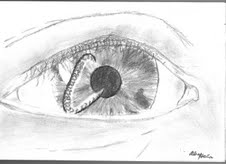
Short Film on Synesthesia
Thursday, December 02, 2010
New Synaesthesia Survey

If you are a synaestete, and you are interested in contributing to our ongoing synaesthesia studies, you can take our advanced synaesthesia survey by clicking below.
Click here to take our advanced synaesthesia survey
If you are interested in becoming a participant in our studies at the University of Missouri, St. Louis but you are not sure if you qualify, we have created a survey that will allow us to determine whether you do. The only required information is your email address. You do not have to be located in St. Louis to qualify.
Click here to take the basic survey
If you have migraine and synaesthesia, you can take our migraine survey by clicking here.
Thursday, October 28, 2010
Philosophy and Psychology Courses Spring 2011
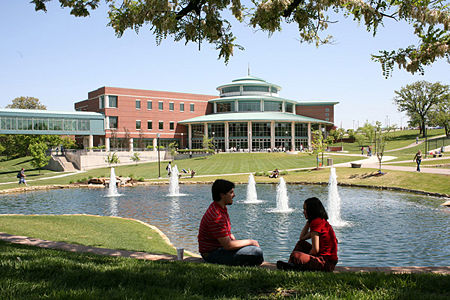 Here is the list of courses I will be teaching/involved in for Spring 2011. I will also be the graduate director of philosophy, starting January 2011, and I will continue my board membership on the gender studies program. So, feel free to come to my office to talk to me about these courses. We are still deciding on the readings. The sexual ethics course is only open to undergraduate students for credit. Some graduate students have expressed interest in sitting in on it. You are very welcome to do that.
1. Sexual Ethics (Big lecture course, freshmen and sophomore, GEN ED, cross-listed with the gender studies program)
2. Virtue Epistemology (upper-level undergraduate and graduate course in philosophy)
3. Biological Bases of Behavior (graduate course in neuropsychology)
Wednesday, October 27, 2010
Synaesthesia Subjects

Tuesday, October 19, 2010
A Dialogue with Gualtiero Piccinini on Philosophy and Neuroscience

and not at all for empirical research. Could you briefly explain how
you became interested in doing empirical research and what your current empirical projects are?
Brit: Actually, I started out in the sciences. I have a 5-year M.S. in neuroscience from University of Copenhagen and The Danish National Hospital. My research was on neurotransmitters, specifically glucagon-like peptide-1 (GLP-1). As a hormone, GLP-1 stimulates insulin-secreting cells. As a neurotransmitter, it modulates stress and anxiety. I was, and still am, very interested in mood disorders,so I really loved this project. But owing to a terrifying event described in the personal information section of my website, I decided to go to graduate school in philosophy. I already had degrees in philosophy and linguistics as well. One of my main areas of specialization in philosophy was, and still is, philosophy of language. Philosophy of language by its very nature is a very empirical area of philosophy.
Philosophy of language by its very nature is a very empirical area of philosophy.
We look at what the linguists do, and they look at what we do. But you are right. Until recently I didn't design my own experiments or studies. My interest in designing my own studies was sparked by a series of events taking place around the time of my divorce. To deal with the consequences of these events, I felt that I had to expand on my knowledge of the brain. Another coincidence sparked my interest in synesthesia. I am now testing for unconscious color processing in 40 higher synestetes. Owing to a nice McDonnell grant, Kathleen Akins and I will be able to host a workshop on abnormal color vision (synesthesia, acromatopsia, color blindsight, etc) next year in Vancouver. I am also working on a large project about the effects of personality assessments on judgments of intentional action. That project started out as a response to Knobe. My third project is on blindsight and will be done in collaboration with a team of researchers in Europe.
Your own work seems to be heavily inspired by empirical research. What are your current projects and how did you become interested in them?
Gualtiero: Wow, I didn't know you had such a scientific background. Now I understand why you know so much neuroscience! A coincidence: I have acromatopsia, so if you decide to work on that topic, you can use me as a subject.
As to my research, I have three main projects. The first is on what constitutes concrete computation—what distinguishes things that compute from things that don't. This is relevant to many sciences: computer science, computational psychology and neuroscience, and even physics. The second is on how to integrate psychology and neuroscience into a unified explanation of cognition. It piggybacks on the first project, because both psychology and neuroscience give computational explanations of cognition. Once we are clear on how computational explanation works, we should be in a better position to say how psychology and neuroscience go together. The third project is on the legitimacy of data from first-person reports (and other "first-person data") in psychology and neuroscience. I argue that this kind of data is scientifically legitimate because such data are actually public data—the outcome of a process of self-measurement on the part of the subject.
But while my work is deeply engaged with various sciences, I don't do any experiments, whereas you do. How hard was it for you to start designing and conducting experiments on your own? Did your prior scientific training prepare for it or or did you need extra help? And do you now consider yourself a philosopher, a scientist, or both?
Brit: I didn't know you had acromatopsia. I certainly will be working on that topic sooner or later. To begin with your last question, I consider myself both a philosopher and a neuroscientist. I have the sufficient background for designing studies and experiments and know statistics pretty well. But I must confess that I still get help with the statistics part. Statistics is hard. Kathleen Akins calls herself a neurophilosopher.
I think neuroscience is hard, just about as hard as good philosophy.
I don't call myself that. I still do some armchair philosophy. I also draw heavily on other people's empirical results in my work on psycholinguistics and philosophy of language. When I think about neuroscience, I am a neuroscientist. But I think I have an advantage. Because I am a philosopher, I am used to come up with counterexamples (that's what we do, right?). So, when I design studies or look at data, it is very easy for me to spot alternative hypotheses and to come up with ways of ruling them out. I think neuroscience is hard, just about as hard as good philosophy.
Did you ever consider doing empirical experiments or studies on your own or in collaboration with others? Why? Why not?
Gualtiero: I usually don't consider doing experiments, mostly because I'm already busy enough with what I'm doing. But I do have a little bit of relevant experience.
For my undergraduate honors' thesis, I designed and conducted a fairly serious piece of experimental cognitive psychology.
For my undergraduate honors' thesis, I designed and conducted a fairly serious piece of experimental cognitive psychology. At the time I wanted to become a cognitive psychologist, but later I decided to go back into philosophy.
I found it interesting that you don't consider yourself a neurophilosopher. Me neither, because to me neurophilosophy sounds too much like picking your favorite neuroscience papers and putting a "philosophical" spin on them. I think of myself as a philosopher of mind and of the sciences of mind. How about you; why don't you
consider yourself a neurophilosopher? You also don't seem to consider yourself an experimental philosopher. Why? Experimental philosophy seems to be all the rage. Why aren't you jumping on the bandwagon?
Brit: Well, strictly speaking, my intentional action project falls under the category of "experimental philosophy". But I am not sure I think the field ought to be called "experimental philosophy". As far as I am concerned, it's social psychology. Hopefully over time I will be able to add a neuroscientific touch to my project on intentional action. But right now, I don't see the difference between that project and other similar projects in social psychology. To say that what
other people call "experimental philosophy" really is social psychology is not to say that it has no philosophical relevance.
What
other people call "experimental philosophy" really is social psychology.
It certainly does. I think that some of the results, as far as they hold up, cast some doubt on some of the armchair characterizations of the notion of intentional action. I also think philosophers, to the extent that they have sufficient training in designing experiments, can bring new advances to this particular area of social psychology.
I agree with you about your characterization of neurophilosophy. I prefer to just think of myself as working in two distinct areas: neuroscience and philosophy. The theories I advance in neuroscience are, of course, inspired by my work in philosophy of mind, and vice versa. Discoveries in neuroscience can provide counterexamples to theories in philosophy of mind. But philosophy of mind also provides us with results which neuroscience cannot give us. For example, neuroscience as it is currently carried out cannot give us an answer to the question of what consciousness is. Neuroscience, however, can provide an answer to the question of what the correlates of consciousness are. So, both areas have an important role to play.
What is your take on the new experimental turn in philosophy? And how do you think results in neuroscience can influence theories in philosophy of mind, and vice versa?
Gualtiero: I agree with you on experimental philosophy. I'm always glad when people try to back up their theories with empirical evidence, especially given that some philosophers tend to trust their intuitions too much. If philosophers have the expertise and resources to collect their own data, more power to them. That being said, some experimental philosophers tend to exaggerate the consequences of their theories, as if a couple of simple experiments could easily and directly refute all kinds of theories. Testing theories is harder than some experimental philosophers seem to think.
Even worse, too many philosophers, including philosophers of mind, still act as though empirical evidence is irrelevant to their theories.
Too many philosophers, including philosophers of mind, still act as though empirical evidence is irrelevant to their theories.
Occasionally this is true, but many times it's not. And since the mind is a product of the nervous system, it should be blindingly obvious that neuroscience and philosophy of mind have much to learn from each other. Philosophy of mind should look at what is known about the nervous system to constrain its theories, while neuroscience can take much inspiration from philosophical theories about the mind.
This has happened before, by the way. For example Warren McCulloch, a pioneer of computationalism, was a neurophysiologist and psychiatrist but also studied a lot of philosophy. His project was to explain intentionality and knowledge in neuroscientific terms. He didn't quite succeed, but he did make a strikingly innovative proposal that transformed the whole field. If we are going to improve on our current understanding of the mind-brain, we would do well to emulate McCulloch and study both philosophy and neuroscience.
Thursday, October 07, 2010
Why Your Children Need Professors With Tenure
By Cary Nelson
If you follow the news these days, you know that tenure is getting a bad rap. Fox News in particular will tell you that tenure shields radicals who are trying to indoctrinate your children to overthrow the government. In truth, it's hard to find any faculty member sending that message. No matter. It's a good scare tactic. But even the responsible press prefers editorials and op-ed essays claiming that tenure protects deadwood, preserves an aging professoriate, and costs too much money. Although each of those claims can be proved wrong, they have gained traction anyway.
From The Chronicle of Higher Education. Read the rest of this article
Wednesday, September 08, 2010
Central States Philosophical Association 2010
The program and the registration form for the 2010 meeting of the Central States Philosophical Association in Detroit are now available for download. Here is a quick overview of the program:
Thursday Afternoon September 23, Values and Conventions
1:00 Iddo Landau (Haifa): Meaningfulness, Meaninglessness and Unmeaningfulness: Did Hitler Have a Meaningful Life?
3:00 Natasha N. Liebig (South Florida): The Flash of Being: Vision, Speaking, and Place in Process Ontology as Seen Through Foucault
4:00 Marija Jankovic (Indiana): The Intentional Underpinnings of Convention
Thursday Afternoon September 23, Epistemology
2:00 David Alexander (Iowa State): Inferential Internalism and the Argument from Responsible Belief
3:00 Jonathan Hecht (San Diego State): How Skeptics Live Their Lives
Commentator: Bruce Dutra (Mott)
4:00 Tim Kakos (Northern Illinois): Knowledge and Multi-Premise Closure
Thursday Afternoon September 23, Ethics
1:00 Robyn R. Gaier (Saint Louis): Autism and Moral Indifference: Uncovering a False Dichotomy
2:00 Bertha Alvarez Manninen (Arizona State West): What did "Octomom" do wrong?: Exploring the ethics of fertility treatments
3:00 Howard Nye (Alberta): Harming as a Side-Effect Versus Benefiting at Someone’s Expense
4:00 Eric Reitan (Oklahoma State): Avoiding the Personhood Issue: Abortion, Identity, and Marquis's 'Future Like Ours' Argument
Friday Morning September 24, Mind
9:30 Eric Hiddleston (Wayne State): A Counterexample to Kim’s Account of Reductive Explanation
10:30 Gordon Knight (Iowa State): Phenomenology, Embodiment, and the Mind
11:30 Donald Sievert (Iowa): Witgenstein's Vexation with Color Incompatibility
David Stern
Friday Morning September 24, Epistemology
9:30 Brendan Murday (Ithaca College): The Problem of the Criterion: Methodism and Higher Order Epistemic Constraints
10:30 John Turri (Waterloo): Unreliable Knowledge
11:30 Kok Yong Lee (Missouri-Columbia): On the Distinctive Value of Knowledge
Friday Morning September 24, Rights and Values
9:30: Philip M. Mouch (Minnesota State University Moorhead): Open Adoption Records: Privacy Rights vs. Equal Rights?
10:30 Tyler Paytas (WashU): Locating Normativity in Human Rights: A Defense of Naturalistic Theories
11:30 Scott Forschler (Minneapolis): The Formula of Universal Law is Heteronomous
Friday Afternoon, September 24, Metaphysics
2:00 Valia Allori (Northern Illinois): Do Particles have Free Will?
3:00 David Goldman (UCLA): Modification of the Reactive Attitudes
4:00 William A. Bauer (North Carolina State): Priority Monism and Extrinsic Properties
Friday Afternoon, September 24, Epistemology
2:00 Peter Murphy (Indianapolis): Epistemic Descent Principles
3:00 Ted Poston (South Alabama): A Coherentist Account of Reasons
4:00 Michael Shaffer (St. Cloud): Pragmatic Encroachment Penalized: Five Yard Penalty ... Repeat First Down
Friday Afternoon September 24, Value and Deliberation
2:00 Amanda Roth (Michigan): Dynamic Deliberation of Ends
3:00 Kathleen Dougherty (College of Notre Dame of Maryland): Commitment, Identity and Risk
4:00 Hallie Liberto (Wisconsin): Organ Sales and the Commodification Objection
Evening: Bruce Russell's presidential address: In Defense of Non-doxastic, Deontic Foundationalism
Chair: Vice President Berit Brogaard (Missouri)
Saturday Morning September 25, Metaphysics
9:30 Majid Amini (Virginia State): Is the Maximal God Free of Paradox?
10:30 Eric Kraemer (Wisconsin, La Crosse) Proper Functions and their Natural and Divine Designers
11:30 Bruce Dutra (Mott): Theism and the Concept of the Greatest Possible Being
Saturday Morning September 25, Epistemology
9:30 Andrew Moon (Missouri-Columbia): Beliefs Do Not Come in Degrees
10:30 Shawn Graves (Cedarville): Defending the Equal Weight View from Some Problem Cases
11:30: Andrew Spear (Grand Valley State): Metajustification, Skepticism and the A Priori
Saturday Morning September 25, Language, Epistemology and Mind
9:30 Yu Izumi (Maryland, College Park): On a theory of descriptions in articleless languages
10:30 Ali Hasan (Iowa): Compassionate Phenomenal Conservatism
11:30 David G. Stern (Iowa): Wittgenstein and the Inverted Spectrum
Saturday Afternoon September 25, Mind
1:00 Irwin Goldstein (Davidson): The Mental is not Physical
2:00 Rocco Gennaro (Southern Indiana): Conceptualism and the Richness Argument
3:00 Mark Steen (Saint Louis): Jesus and Mary: Why Christians Should not Believe in Non-Physical Qualia
Saturday Afternoon September 25, Metaphysics
1:00 Molly Gardner (Wisconsin): Time Travelers Who Kill Their Younger Selves: They’re Closer Than You Think
2:00 Irem Kurtsal Steen (Missouri): Almost Ontology: Why Epistemicism Cannot Help Us Defend Restricted Composition
3:00 Ben Caplan (Ohio): Brutal Counting
Saturday Afternoon September 25, Metaphysics and Ethics
1:00 Jeffrey Snapper (Notre Dame): Why the Vagueness Argument is Unsound
2:00 Dustin Nelson (Tennessee – Knoxville): Character and Moral Luck
3:00 Matt Flummer (Missouri): If I were in the Shoes of a Non-Cognitivist, I would Plan on Being a Classical Expressivist: An Evaluation of Gibbard's Plans
4:40 Jim Pryor (Keynote Address): Hypothetical Oughts
Chair: President Bruce Russell

Monday, August 09, 2010
Call for Commentators CSPA
Tuesday, August 03, 2010


Friday, July 30, 2010
Freelance Writing: FAQ

Is LIVESTRONG.com a for-profit site or a non-profit site?
It is a for-profit site, making donations to cancer research.
Is LIVESTRONG.com associated with LIVESTRONG.org?
Yes, but LIVESTRONG.org is a non-profit site
Is LIVESTRONG affiliated with Lance Armstrong?
Yes, LIVESTRONG is also known as "The Lance Armstrong Foundation." Armstrong remains closely connected with both sites. He started LIVESTRONG.org as a site in support of people with cancer.
Are the writers on LIVESTRONG professional writers?
Yes, they write for money. To write for LIVESTRONG.com Health or LIVESTRONG.com Nutrition you must have a medical degree or an M.S. in a medical field.
Are the articles on LIVESTRONG.com reviewed?
Yes, they are reviewed by editors who have at least five years experience editing for a print publication.
If I don't get into graduate school in philosophy, can I make a living as a freelance writer?
Yes, but I strongly recommend that you supplement your degree with an M.S. in a medical field. You will make more money.
How do you know what to write about?
You will get an assignment or a title to write to, or you can send a pitch letter to an editor.
Do I need a published article to be considered as a freelance writer for a popular magazine or ezine?
No, but you will need a well-written article, written in the style of the publication you want to write for.
How do you find your sources for health-related publications?
Articles published in top medical, nutrition or neuroscience journals are the best resources. You can then contact the media person at a university listed in the "affiliations" section of the article and ask if she has a news release that you might have overlooked. If she does, she will send it to you or provide a link. That's her job. If she doesn't, ask her if she can arrange a phone conversation with one of the authors of the paper.
Do you have to learn how to write for popular publications?
Yes, lots of know-how. The explicit rules are simple. Use an active but authoritative voice. Avoid passive tense. Avoid the dummy phrase "to be." Avoid empty phrases. Don't state unsupported facts or anything that is not common knowledge. Find a source to "blame" it on. Unless you article is strictly informative (e.g., How is a Frontal Lobe Meningioma Diagnosed?), use a surprising or strong, supported fact or a catchy anecdote as your first sentence. Actually, a strong beginning is recommendable even if your article is strictly informative. Never write "this article is about ..." But do convey why the reader should continue reading. Why is this important? Hint at how you are going to address the problem. Then practice practice practice.
Thursday, July 29, 2010
Why Men are Never Depressed
(Thanks to Hugh Mellor for sending this)
Your last name stays put.
The garage is all yours.
Wedding plans take care of themselves.
Chocolate is just another snack.
You can never be pregnant.
Car mechanics tell you the truth.
The world is your urinal.
You don't have to stop and think which way to
turn a nut on a bolt.
Same work, more pay.
Wrinkles add character.
Wedding dress £5000; DJ rental £200.
People never stare at your chest when you're
talking to them.
New shoes don't cut, blister, or mangle your feet.
One mood all the time.
Phone conversations are over in 30 seconds flat.
You know stuff about tanks.
A five-day vacation requires only one suitcase.
You can open all your own jars.
You get extra credit for the slightest act of thoughtfulness.
If someone forgets to invite you, he or she can still be your friend.
Your underwear is cheap.
You almost never have strap problems in public.
You are unable to see wrinkles in your clothes.
Everything on your face stays its original colour.
The same hairstyle lasts for years, maybe decades.
You only have to shave your face and neck.
You can play with toys all your life.
One wallet and one pair of shoes in one colour for all seasons.
You can trim your nails with a pocket knife.
You can choose whether to grow a moustache.
You can do Christmas shopping for 25 people in 25 minutes on 24 December.
Wednesday, July 28, 2010
Philosophy Student Reflects on his Weight Loss
My former student Adam Taylor reflects on his 156 pounds weight loss here.
Tuesday, July 27, 2010
Growing Up

Friday, July 23, 2010
New Consciousness Paper
I have made my paper for the Syracuse SPAWN conference temporarily available here. I am sure it will undergo drastic changes after the conference.
Thursday, July 22, 2010
Color Experience in Blindsight?
I have a new paper called "Color Experience in Blindsight?" It's a semi-protected link, so Google search engines won't pick up on it. If you are interested, please go ahead and take a look at it. The link will be fully public, when I am done making little alterations (very little, as the proofs are on their way).
Wednesday, July 21, 2010
There's Something about Mary

From my newest blog: There's Something about Mary: The Princess Diaries
The fairytale began on September 16 2000 when Mary Donaldson, an ordinary Australian girl, met Crown Prince Frederik of Denmark at Merivale's Slip Inn in Sydney during the Summer Olympics.
Three years later the Australian beauty and the crown prince decided they wanted to spend the rest of their lives together. On October 2003 after a long-distance relationship, a short stay in Paris and a number of private visits to Denmark, Mary and Frederik got engaged. Read the rest of this post >>
Saturday, July 17, 2010
Stupid People Deserve What They Get
That's the title of my paper responding to Joshua Knobe. The paper argues for personality effects in judging intentional action. It's available here.
Wednesday, July 14, 2010
About Color Vision

Tuesday, July 06, 2010
Working Your Way Up

In a welfare country like Denmark, you get an education, then you get a job. In theory, you cannot work your way up to anything. Of course, there are raises, promotions and prizes, but starting out as the copy girl and ending up as the editor-in-chief at a major publishing house is practically unheard of.
Working your way up is also foreign to the philosophy arena in the US. There are, admittedly, some philosophers who have worked their way up in terms of where they publish, who they hang out with, or where they work. Graduating from Syracuse University and ending up at Oxford and Princeton, John Hawthorne is an excellent example of someone who has worked his way up. But it's rare. It's rare to hear of someone who starts out at Crackpot Community College in Southern Mississippi and ends up at Jackpot Ivy League University in Manhattan.
The philosophy profession inadvertently borrows some of its ideas from European royalty and aristocracy. You are either born with a silver spoon in your mouth, or you are not. If you are not, you can marry your way in. Or if you are very ambitious and very lucky, you can get hired as, say, Princess Mary's fashion consultant and make your way into the inner circle, get invited to their parties and be seen with her eating lunch at upscale vegan cafes in Copenhagen. But fashion consultants don't become royalty. Like the crown prince couple's best friends from high school and college, they just hang out with them, get media attention and a taste of life in a castle.
Unlike the real castles, the philosophy profession's castles have a few loopholes that make it possible for a few of the fashion consultants and college friends of the philosophical royalty to slip through the cracks. Tenacity, strategic planning and a good portion of luck can increase your chances. Luck is an uncontrollable factor but the rest of the recipe goes like this. Keep a finger on the pulse, find out about the royalty's research interest and concentrate on those areas, publish in the journals approved by the royalty, cite the royalty's work extensively, do not criticize the royalty, criticize those the royalty criticizes, find out where the royalty hangs out, present your work at those events, become their fans and supporters. The recipe is no surefire route to success but it helps. There are other little secrets to success, which I will save for another post.
But back to working your way up. The recipe I just gave you for making your way to the top in philosophy is not a recipe for how to work your way up. Working your way up in the genuine sense of the word means starting on the floor and then slowly through good, solid work breaking through the glass ceiling.
Having flirted a bit with writing for popular media, I already have a sense of how you can really work your way up in that business. Though every rule has its exceptions, you don't start out as a New York Times reporter or a CNN correspondent. But if you can write or you have the abilities to learn to write, you can get there in a finite number of steps. You literally start at no-name sites with nearly no requirements in terms of a platform or portfolio. Then you move to local newspapers, magazines or slightly more prestigious online sites. By then you have a couple of quality clips to include with your pitches. Next step is a national publication. The recipe then goes like this. Work on your pitches, do quality work, learn as you go and move one little step up at a time.
Despite going against my childhood teachings, I like the idea and the process. It gives you an immediate sense of gratification. Every assignment you complete successfully takes you one step closer to the goal. Pay-offs (monetary as well as mentions) along the way increase steadily and typically match your current abilities and accomplishments. The process is fair and satisfying in a way that aristocracy and royalty are not.
Wednesday, June 16, 2010
Truths of Existence
 As I click on the little Firefox icon at the bottom of my screen and see the letters G O O G L E form bright and colorful on my screen, I release a sigh of relief. For several weeks now, I have been without a reliable internet connection. AT&T didn't cut the cable, nor did my laptop take its last breath ... no, none of that... I was simply traveling in Turkey. I had my computer with me (of course), and I paid good money for a wireless connection everywhere I went, but money can't buy everything. Not a reliable wireless connection. Not in Turkey.
I was sweating a lot while I was there. Maybe it was the hot weather. Maybe the slight sunburn. Or maybe it was the error message I had to watch on the screen time and time again... the half-written emails that disappeared in thin air. If I didn't learn anything else on my journey, I learned this: To love and honor the shiny colorful letters spelling the magic word "G O O G L E".
Most of the time the letters never appeared. I am not an impatient person. I happily wait 18 months to hear back from a journal. But at that point I slowly realized that I had to claim defeat and make do with whatever desktops I could find at the local cafes. So, I packed away my laptop, paid good money, clicked on the little Explorer icon and waited for the beautiful letters to make their magic appearance.
There. G O O G L E. What an awe-inspiring sight! Type "Gmail". Login. Password. Glance at inbox. Open email. Click reply. Write. Next email. Write. Next. And then ... Bazoonga! Error message.
I looked around. A woman in business attire got up from her chair, opened her handbag, took out a nail file and filed her nails while she casually glanced at her screen. "What's wrong with the internet?", I asked, trying not to sound too desperate. "It's down", she said nonchalantly. "Right", I nodded, "It seems to happen to me constantly. Is this normal?" "In Turkey the internet is not very good. It comes and goes. We are used to it", she chuckled. "Good God", I cried, "How do you guys ever get any work done?". She sent me a skeptic look. "You get used to it. You work for 15 minutes. Then you take a break. Then you work for 15 minutes again". I nodded knowingly and thought about what I would have done, had I been born in Turkey. Not a philosopher, not an academic, not a writer. Maybe a truck driver. At least the trucks seemed to work.
Back in the hotel I was restless. No computer. No internet. At least the TV was working. I could watch Eurovision. Or I could use my iPhone. $19.97/minute in roaming charges. Maybe it was worth it, all things considered. If only the money wasn't going to AT&T. I ended up reading Mehmet Bastiyali's "Truths of Existence" instead, a Turkish interpretation of the Koran, translated into English. "Every person should occasionally be able to shake himself free of the pressures of daily life to think about the questions of who he is, how and why he was created ...", it said. I thought about his wise words for a moment. Then I grabbed my iPhone.
Tuesday, May 25, 2010
Thomas Knoten's Commencement Speech
My student Tom Knoten, a former successful lawyer, served as a commencement speaker at this year's graduation ceremony.
Saturday, May 08, 2010
The Unreliability of Eyewitness Testimony: A Case Study

The class was attended by a real lawyer Tom, who was professionally trained to query eyewitnesses. Chris was assigned the role of police officer, Alex was assigned the role of juror, and Lisa, Jessica and Matt were assigned the roles of criminals and victims.
Tom, Chris and Alex were asked to leave the room. Lisa, Jessica and Matt were then told to go to the main office and plan a crime. They were also told to change their clothes and enter the room later wearing accessories, as they saw fit.
I then instructed the rest of the class to pretend that they were at a cafe. They were told to engage in real conversations with each other, as they would at a real cafe. They were furthermore asked not to pay any special pay attention to Lisa, Matt and Jessica, were they to enter the room, unless there was something special to pay attention to.
Jessica and Matt then entered the room, sat down, and I overheard them engage in a conversation about cats. Then Lisa entered the room, noticed Jessica and Matt and got terribly upset. An argument took place, and Lisa then stabbed Matt and ran away. One of the cafe patrons called the police on his cell phone. Chris then came and questioned Jessica and Matt (who survived the stabbing). He caught Lisa and then questioned her too.
Tom (the lawyer) interviewed victims, criminals, the police officer, and eyewitnesses. Then the trial began. Tom called and queried people, as he saw fit, one at a time. Finally Alex the juror was asked to decide which of the eyewitnesses was the most reliable.
Alex said that he thought Kristina was the most reliable eyewitness. Her report was clear and to the point. She also offered many details which were lacking in the other eye-witnesses' accounts. She looked self-confident and reliable and used very few modifiers of the sort "I believe", "I think", "probably", "could be", "might have".
As it turned out, Kristina was the least reliable eyewitness. She got the color of Lisa's shirt wrong, and there were various other inaccuracies in her story. Our class experiment had confirmed the existing theory: Eyewitness testimony is notoriously unreliable. What's more: We are unable to tell when it is.
All the eyewitnesses wrongly categorized the crime as a jealousy stabbing which involved a man (Matt), his new lover (Jessica) and his old lover (Lisa). In fact, Jessica and Lisa were lovers, and Jessica was cheating on Lisa!
Sunday, May 02, 2010
What Women's Butts Really Look Like

But c'mon, you gotta give Britney credit for exposing her behind like this with cellulite and everything. Most women look like the gal on the right, not the gal on the left. The one on the left is the result of heavy photoshop brushing, not the real thing. Dream on guys.
Or better: stop dreaming. If you really want someone who looks like the girl on the left, you probably have pedophile tendencies cuz that's how a 10-year-old looks. Once the teen hormones kick in, fat cells naturally get filled, and they don't get filled evenly. Or maybe you should join an association for anorexic girls. If you are lucky, sick starving girls might look like that too (HT: Feminist Philosophers).
Saturday, May 01, 2010
Life and Work
 I just love this picture. It's from Australia: Declan Smithies's 30 years birthday party and engagement party to Jenny. The other two in the picture are Rhiannon Long-Rabern and Holly Lawford-Smith. Leone Miller took the picture. God, I miss those guys. And yes, my hair is red. It changes color like leaves on a tree in autumn. Why is my hair red? Answer: I don't know. Why did I start the love blog? Answer: See my earlier post on stereotypes. Not all of us confuse career with life. Some of us have hobbies. I write on weird topics. That's my hobby. (love, I learned tonight, is a weird topic).