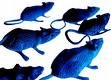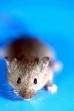

 Vincent Hendricks' new television show "Gal eller Genial" is scheduled to air on Danish television's DR2 on Tuesday April 6 at 8PM. Vincent Hendricks, who is Professor of Philosophy and Logic at University of Copenhagen, will evaluate 20 innovative projects in this new inventor's contest. The projects range from mobile homes for homeless people and cancer treatment with modified UV rays to rat stoppers in all sewer systems.
Monday, March 22, 2010
 Rat Stoppers in All Sewer Systems

Friday, March 19, 2010
Hitler gets a revise and resubmit
Someone put dialogue concerning peer review for a science paper to the same clip (HT: Jeff Roland)
Saturday, March 13, 2010
Book Review: The Hidden Brain: How Our Unconscious Minds Elect Presidents, Control Markets, Wage Wars, and Save Our Lives
In his recent book The Hidden Brain: How Our Unconscious Minds Elect Presidents, Control Markets, Wage Wars, and Save Our Lives science journalist Shankar Vedantam argues that our unconscious thoughts and emotions, for example our implicit sexism, racism and conformity to the behavior of others in a group, govern behavior we explicitly despise. Many Americans have a racial bias against Africans and African-Americans not because of biology but because of culture, says Vedantam. We grow up watching television and quickly learn who the most successful leaders in our country are. We are taught that the stereotype of a successful leader is a white male. We implicitly think that people of color and women are inferior to white males. In stressful situations our implicit biases quiet down our rational inner voices and take control of our decision making. Michael Richard’s racist rant during a 2006 stand-up appearance is an example of how our true temperament may suddenly rear its ugly head. Vedantam does not think that Michael Richard is significantly more racist in his beliefs than any one of us. The difference is a matter of degree, he says.
According to Vedantam, our unconscious mind fuels most of our decisions to act the way we do. Vedantam explains how the hidden impulses of a large crowd of onlookers fueled the horrible events that took place on the Belle Isle Bridge in Detroit on the morning of August 19, 1995, where Deletha Word, college student and mother of a 13-teen year old, was beaten up beyond belief by Martell Welch in front of crowd of onlookers who not only failed to intervene but also failed to notify the police. Some allegedly cheered him on as he beat up Deletha and tore off her clothes. Why didn’t the onlookers put an end to it? Because people unconsciously mirror the reactions of others in a crowd. Even though they understand at a rational level that they ought to notify the authorities or stop the incident, their hidden world of learned behavior prevents them from doing so.
One of the most fascinating sections of Vedantam's book is the discussion of how two transgendered biology professors at Stanford University underwent a complete change, not just sexually but also in how they were treated professionally, when they changed their appearance. One of the professors went from being a woman to being a man, and the other went from being a man to being a woman. The one who became a man suddenly was taken more seriously and was treated with a whole new kind of respect. The one who became a woman found that she was taken less seriously, and her pay fell significantly relative to her peers, all as a result of changing her sex.
As the book progresses Vedantam becomes increasingly more free in his interpretations of the scientific data. He moves from discussions of how our unconscious attitudes shape small-scale behavior to our unconscious resistance to famine relief and the hidden brain's seductive powers in suicide bombings and presidential elections. Despite the leap from solid evidence to more creative hypotheses about what drives our political and social decisions, the later sections of the book raise the important philosophical questions of whether we are responsible for behavior driven by our brain's hidden impulses and whether we can change our tendency to act on our predilections.
Though Vedantam remains optimistic about our capability of changing our inclinations by bringing our implicit biases to light and by using reason rather that gut feeling to guide our decisions, he doesn't really offer much by way of insight into how we should go about changing our ways. He also does not really answer the question of to what extent we should be held liable for behavior governed by our unconscious biases. But on a whole The Hidden Brain offers an insightful treatment of the delicate question of why we make the horrible decisions we do when they could have been avoided with a bit of confidence in the light of reason.
Wednesday, March 03, 2010
Koksuhking God
During our prospective student Abe Brummett’s travels in the pacific islands he came across a tiny island in Micronesia that is very religious. This is a short video of the moment when Abe’s Peace Corps class was first taught the word for "praise" in the Kosraen language.
Thursday, February 25, 2010
Call for Papers: Origins of Design in Nature
Liz Swan is looking to solicit contributions from women philosophers of science for a prospective Springer volume she is co-editing entitled, "Origins of Design in Nature: A Fresh, Interdisciplinary Look at How Design Emerges in Complex Systems, Especially Life". You can contact her at: Liz.Swan@ucdenver.edu
Wednesday, February 24, 2010
Hitler finds out about his philosophy grad school applications
Brian Leiter linked to this video a few days ago, but because of the Central Division Meeting I didn't get around to watching it until now (Thanks to John Fraiser for reminding me!). It's hilarious.
Tuesday, February 23, 2010
Alternative Location at the Pacific Division Meeting of the APA
As you might have heard the Pacific APA meeting in San Francisco is taking place at a hotel that is currently in a labor dispute. Since many members want to honor the boycott of the union, the University of San Francisco offers an alternative location. At this point there are 17 sessions fully confirmed. Here is the website with all the info (HT: Gerard Kuperus).
Tuesday, February 16, 2010
Heidegger And A Hippo Walk Through Those Pearly Gates
I just read Heidegger And A Hippo Walk Through Those Pearly Gates: Using Philosophy (and Jokes!) to Explore Life, Death, the Afterlife, and Everything in Between (Thanks to Brian Leiter for the link). It's available as an e-book through the Penguin group.
The authors Thomas Cathcart and Daniel Klein were once philosophy graduate students at Harvard University. After graduating they went on to do other things. Cathcart served as a probation officer and attended various divinity schools. Klein wrote a lighthearted book on jokes and a number of thrillers. After many years the two men re-united and wrote Plato and a Platypus Walk into a Bar . . .: Understanding Philosophy Through Jokes, a humorous and lighthearted introduction to key concepts in philosophy. It was rejected by 40 publishers before an editor finally showed interest. Initially the book was called An Existentialist and a Horse Walk into a Bar. But the editor didn't like the title. "I want it to be called Plato and ... something", he said. Cathcart quickly replied "A platypus". The book went on to become a bestseller. The two college friends followed up with Aristotle and an Aardvark Go to Washington, a humorous book about logic tied to political speech. The alliteration has become their logo. One wonders whether their next book is going to be called Frege and a Flamingo Walk into an APA Smoker.
Cathcart and Klein's latest effort explores the meaning of life and death through a dialogue between the two authors. The dialogue includes serious passages, jokes and clever little gags, such as the continual assignment of flippant nick names to philosophers. Some reviewers found the running gags annoying. For example, the authors refer to Heidegger as 'Heidi' and 'Marty', and Sigmund Freud as 'Siggy'. I found the style refreshing, and while most of the jokes didn't originate with the authors, they are well placed in the context of more serious philosophical discourse.
Incidentally, the authors' French publisher didn't want 'Heidegger' in the title of the translation because of Heidegger's Nazi associations. The French editor had once put out a book of letters from Heidegger to his wife. No one bought it. So, in France the book will be called Sartre et la Salamandre.
The authors' main aim in the book is to educate the reader about the immortality systems cultures go out of their way to design. Immortality systems are ways of denying death. Religions that promise eternal life are immortality systems. So is the urban tripe: the university club, the fraternity, the golfer club. Groups outlive individuals. Or you decide that you are going to live on in the hearts of your country men, or through your publications and international reputation. You decide that that's going to be your immortality system. But, the authors say, clinging to an immortality system is cheating yourself of a fulfilling life. It means that you are denying death. By not embracing death you are not living fully. And who wants eternal life through others anyway? As Woody Allen once wisely put it, "I don't want to live on in the hearts of my country men. I want to live on in my apartment".
The authors point out that immortality systems don't work very well. People are ultimately willing to kill each other to save their immortality systems. The reason: If I buy into one, and you buy into another, then yours could ultimately be seen as a threat to mine.
Historically, philosophers thought they were giving us a good message when they told us to get in touch with our mortality, Cathcart and Klein say. If you deny your own death, you also reject the chance of feeling fully alive. If we had eternal life, we could waste a couple of millennia making mistakes. It wouldn't matter. It is because of our mortality that we have to take responsibility for ourselves. Artifacts are stuck with the purpose they were designed to have, they cannot change their essence. Human beings, on the other hand, choose what they are going to become. However scary it may be, you have to take responsibility for your own life, Cathcart and Klein add. The message of the book: Face death head on and live intensely.
It's a fine little book. I highly recommend it to anyone who wants a lighthearted and humorous reality check on life and death.
Monday, February 15, 2010
Friday, January 15, 2010
List of Organizations Providing Direct Relief to Haiti
Our chancellor sent us this list of organizations providing direct relief to Haiti (via the Association of International Education Administrators). Or if you are interested in helping immediately, then you can text "HAITI" to "90999" and a donation of $10 will be given automatically to the Red Cross to help with relief efforts. Or text "YELE" to "501501" and a donation of $5 will be given automatically to Yele Haiti to help with relief efforts. The transactions will be charged to your cell phone bill (via Chancellor Tom George).
Action Against Hunger
American Red Cross
Beyond Borders
CARE
Direct Relief International
Doctors Without Borders
HED
International Medical Corps
International Relief Teams
Meds and Food for Kids
Mercy Corps
Operation USA
Oxfam America
Partners in Health
Save the Children
Stop Hunger Now
UNICEF
World Concern
Yele Haiti
Monday, January 04, 2010
Friday, January 01, 2010
New Year's Day Scam
Mel, Angie and I got a text from someone we don't know. We decided to play along, by which we mean that we completely ignored standard grammar and spelling conventions and adapted to the guy's favorite topics. We attempted a teenage equivalent of a Turing test. The guy is under the impression that he is texting a male friend. Here is how the dialogue went:
Nathan (the name comes up later): I am completly gay guys just to let you know
Us: Congratulations! Who are you?
Nathan: Lol this is nathan ryan patient sent that
Us: How is your patient? Happy new year (explanation: we parsed this wrong. We thought his name was Nathan Ryan and that his patient sent it)
Nathan: What
Us: Sorry I forgot about that. Long day of drinking. How is he doing anyways. LOL
Nathan: Good i guess lol
Us: What did you do for new year's lol
Nathan: Hung out wit him got high
Us: Do you have pictures?
Nathan: No why
Us: Sorry I thought it was a party or something. So he stole yr phone?
Nathan: Ya lol and sent that to almost everyone on it
Us: OMG, that's so funny. LOL. New year's resolution?
Nathan: No dont have one hbu
Us: Get high more often
Nathan: Cool thats a good one
Us: What are you guys doing tonite?
Nathan: Nuthen sitting hear
Us: Is Ryan there?
Nathan: No if went good
Nathan: I ment home
Us: Going over there later?
Nathan: No
Us: Was there anyone else there yest. New year's hook-up? LOL
Nathan: No it was gay we couldn't find anywhere to go
Us: I hooked up w the hottest shit ever omfg (explanation: we are trying to find out what sex we are. 'Shit' is gender-neutral. We are hoping he would respond with 'who was she?' or 'who was he?')
Nathan: Cool who was it
Us: I don't even know there name wuz
Nathan: Lol thats awesome
Us: How is John doing? (Explanation: we were trying to get more information out of him)
Nathan: Jhon who
Us: I fucking forget his last name, but u remember that one time, that was so funny
Nathan: No what time lol
Us: Can't believe you don't remember, you were so fucked up, omg that fucker is so funny
Nathan: Lol that might be why I cant remember lol what happend
Us: Omg you puked so hard, it was hillarious is Ryan still hanging w that hot blond chick? (Explanation: we saw a facebook picture of some Ryan Patient but it wasn't even his)
Nathan: Idk
Us: Man she was hot. What's up tomorrow?
Nathan: Practice
Us: Cool, where? (Explanation: we are trying to figure out which kind of practice)
Nathan: School
Us: Shit oh right, what's up after that?
Nathan: Idk hbu
Us: Heard about a party, not sure yet, wanna go?
Nathan: Ya sure
Us: Wanna smoke a fat blunt
Nathan: Ya
Us: Do you still c what her face
Nathan: What
Us: John told me y hooked w sm hottie, but prob he just being gay
Nathan: Ya lol if is
Us: Can't believe y didn't get any last night, WTF
Nathan: Lol
Us: What happened at last practice?
Nathan: Nuthen we went longer than the jv but all we did was go live
Us: See y 2morrow prob. Gotta go
Nathan: K
Saturday, December 12, 2009
PhilPapers Survey: Classical or Non-Classical Logic?
 For me one of the most surprising results in the PhilPapers Survey was the result of the logic question. In the target group 51.5% accept or lean towards classical logic, whereas 15.3% accept or lean towards non-classical logic. For all respondents, the distribution was: 44.3% versus 20.1%. I have seen people around the web say that they were surprised that so many accept or lean towards non-classical logic. So, let me explain why I was surprised that the numbers were not higher for non-classical logic.
First, as many commentators on the web have pointed out, philosophy undergraduate students often mistakenly believe that if you adhere to classical logic, you are required to treat corresponding English expressions accordingly, for example, they believe that you are required to treat the indicative conditional as a material conditional. Sometimes their logic teachers are responsible for inducing this belief in them. In any event, this belief often motivates undergraduate students (and some graduate students) to reject classical logic, or at least it has motivated many of my undergraduate students. What were the numbers, then, for undergraduate students? Hugely different from the target group: 37.3% accept or lean towards classical logic, whereas 26.7% accept or lean towards non-classical. But there is still a majority for classical logic.
Second, and more importantly, I would have thought that the target faculty had interpreted the question: "Logic: classical or non-classical?" as meaning "What do you believe is the correct logic for reasoning?". If you have a consistent premise-set, you will do well if you reason according to classical logic. But if you have an inconsistent belief-set, you will do terribly if you reason according to classical logic. Hence, classical logic cannot be the correct logic for reasoning in general. But perhaps the question was predominantly read as meaning: "What do you believe is the correct logic for reasoning, given a consistent premise set?". And, I am sure there are other more sophisticated ways of reading the question that can explain the attraction of classical logic.
Third, it's surprising that the numbers for the "other" category were so high. When I have talked to people in the target faculty about logic, a fair number have been sympathetic to logical pluralism. A common view is that we cannot narrow down the number of correct logics to one. But the question wasn't about whether or not we can narrow down the number of correct logics to one. The question was about whether classical or non-classical logic is correct in some respect, which was not specified. Perhaps if you are a logical pluralist, you will answer "neither". But even those who are logical pluralists could have read the question as "What do you believe is the correct logic for reasoning given some arbitrarily chosen premise set", in which case "non-classical logic" would have been an appropriate answer.
These are some of the reasons I was surprised by the results for the logic question. I want to raise a different, but not unrelated, point. At first I was very surprised that so many philosophers don't have determinate views about core issues. I think this mostly explains my errors in the metasurvey. But, on second thought, this is probably not what is going on. Rather, what is going on is that most questions have readings that will make a fair number of philosophers with determinate views say "other". The issue came up on the message board on PhilPapers discussing the surveys. David Bourget was surprised by the results for mental content. David Chalmers responded that one could hold that internalism about mental content is correct and yet think that some mental content is wide. But I bet some philosophers who hold the same views as Chalmers answered "other" to the mental content question, for this exact reason. I did not do that myself, but I considered doing it. In fact, for all of the questions, this sort of ambiguity may have explained the high numbers for the "other" category. For example, for the logic question, people might have thought that if they picked "classical", they would rule out the possibility that it sometimes might be preferable to reason in accordance with non-classical logic.
One final point: I have not yet mentioned the growing interest in the logical paradoxes as a factor. The logical paradoxes are sometimes used to motivate non-classical logic. However, it is not obvious to me that a significant number of philosophers take the paradoxes to motivate non-classical logic. Whether the paradoxes do do this is a very interesting and difficult question. It cannot be answered without saying what we mean by "correct logic". Perhaps languages come with a consequence relation. If this is so, then the Liar paradox may well be used to motivate the view that the consequence relation in English is non-classical. But there are lots of other options too. A recent attractive view is that the semantics for English, despite being inconsistent, is classically closed (variations on this view are held by, e.g. Kevin Scharp, Doug Patterson, Kirk Ludwig and Matti Eklund). Personally, I am more attracted to non-classical inconsistency views. I do not think non-classical inconsistency views entail dialetheism. I think one can take English to be inconsistent, closed under a paraconsistent consequence relation, and yet hold that all contradictions are logical falsehoods (but not logical truths). In terms of the "other" category on the survey, I suspect that if the growing interest in the paradoxes had any influence on the results at all, then it would have been in terms of placing more people in the "other" category.
Wednesday, December 09, 2009
PhilPapers Surveys: Preliminary Results
The preliminary results of the PhilPapers Survey and Metasurvey have now been made public. I will have more to say about these results shortly.
Saturday, November 28, 2009
Deadline Extended for Philosophical Survey
The deadline for the Philosophical Survey and the Philosophical Metasurvey has been extended to Tuesday Dec 3, 2009. You can read about the surveys here.
Sunday, November 22, 2009
The Philosophical Survey
David Chalmers and David Bourget are conducting a philosophical survey on people's views on philosophical issues. You can read about the survey here. Note that the closing time for the survey is November 23 at 7 AM New York time. So today is your last chance to complete it.
Journal Survey
The Northern Institute of Philosophy plans to run a journal dedicated to the publication of short philosophical papers within the core areas of the analytic tradition. They are currently conducting a short survey to determine whether there is general interest in a journal of this kind. The survey can be found here.
Thursday, November 19, 2009
Pre-Central Workshop
The Philosophy Department at Northwestern will hold a one-day Epistemology conference, on the theme of the Epistemology of Testimony, on Northwestern’s Evanston Campus on Wednesday, February 17, 2010 (just before the Central APA). The conference is free and open to the public.
Wednesday, November 18, 2009
Survey on Publishing
Sally Haslanger has created a survey on publishing. She will be on an APA panel in NY to discuss publishing issues, and would like to have some data to discuss. It should take about 10 minutes. It will be useful to have your CV handy as you fill it out. You can find the survey here.
Subscribe to:
Posts (Atom)